
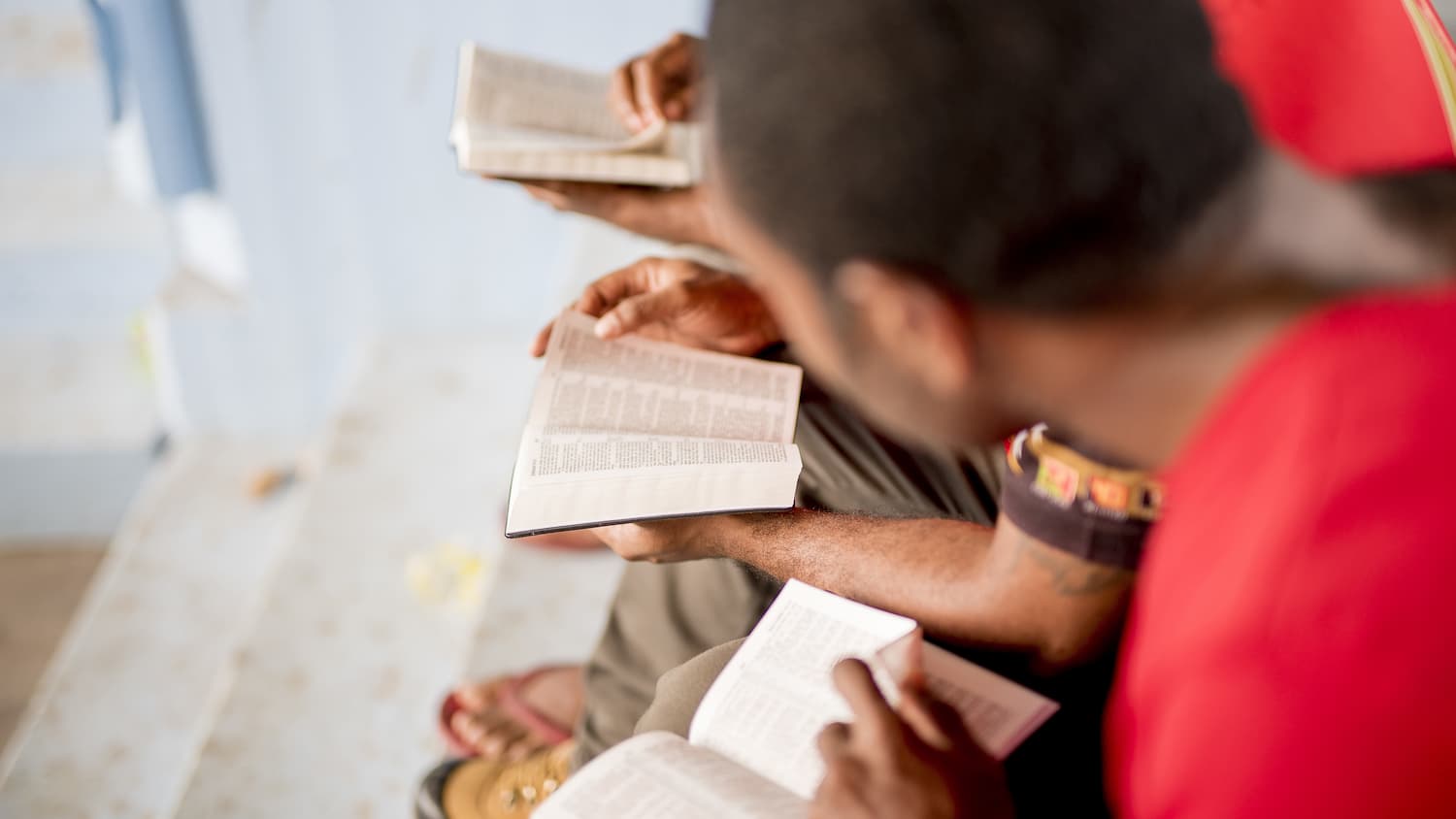
Most people who want to read the Bible never actually begin. Not because they don’t care. Not because they don’t believe. But because when they open it, they don’t know where to start, what they’re looking at, or how it all fits together. It can feel like stepping into the middle of a story that has already been going on for a very long time.
That feeling is real, and it makes sense.
The Bible is not a single book. It is a collection of writings that tell one story from beginning to end. If you try to read it without knowing that, it can feel scattered and confusing. But if you understand how it is built, it becomes much easier to follow.
Scripture says, “The entrance of Your words gives light; it gives understanding to the simple” (Psalm 119:130). That means you don’t need to be advanced to understand it. You just need to enter it the right way.
Where should I start reading the Bible?
Start with two places: Genesis and the Gospel of John. Genesis is the beginning. It shows you who God is, how the world started, and what went wrong. If you skip this, you miss the foundation. The Gospel of John shows you Jesus clearly. It explains who He is, why He came, and what He said about life and truth.
Reading these together helps you see the full picture. Genesis shows you the beginning of the story. John shows you how that story is fulfilled.
How do I read the Bible in a simple way?
You don’t need a complex method. Keep it simple. Read a small section at a time. Then ask three questions:
- What does this say about God?
- What does this say about people?
- What is happening in this passage?
That’s enough to begin. The goal is not to read fast. The goal is to understand what you are reading. One clear passage is better than many pages that don’t make sense.
What mistakes should I avoid?
Many people struggle because they try to do too much too quickly. One mistake is starting in random places. This breaks the story apart and makes it harder to follow. Another mistake is trying to interpret everything on your own. The Bible was not meant to be confusing, but it does require guidance to understand it clearly.
Some people also treat it like a checklist, trying to finish reading instead of trying to understand. That leads to frustration. The Bible is not something you rush through. It is something you learn over time.
Why does structure matter when reading the Bible?
If you read the Bible without structure, it can feel disconnected. If you read it in order, it begins to make sense. The Bible starts with God, then explains creation, then shows what went wrong, and then reveals how that problem is answered. When you follow that flow, you don’t just read verses—you understand the story.
Proverbs says, “Trust in the Lord with all your heart, and lean not on your own understanding” (Proverbs 3:5). That doesn’t mean you stop thinking. It means you don’t rely only on your own interpretation. You allow Scripture to explain itself.
Do I have to figure this out on my own?
You can start on your own, but you don’t have to stay there. Many people begin reading the Bible and then stop because they feel unsure. They don’t know if they are understanding it correctly, and over time, they lose momentum. That is why guided Bible study exists.
A structured Bible study helps you read in the right order, understand what you’re seeing, and ask questions along the way. Instead of trying to piece it together alone, you walk through it step by step with clarity.
Reading the Bible is not about becoming an expert. It is about understanding what is true. You don’t need to wait until you feel ready. You don’t need to have the right words or the right background. You just need to begin in the right place and keep going. And if you want to make that process clear from the start, you don’t have to do it alone.